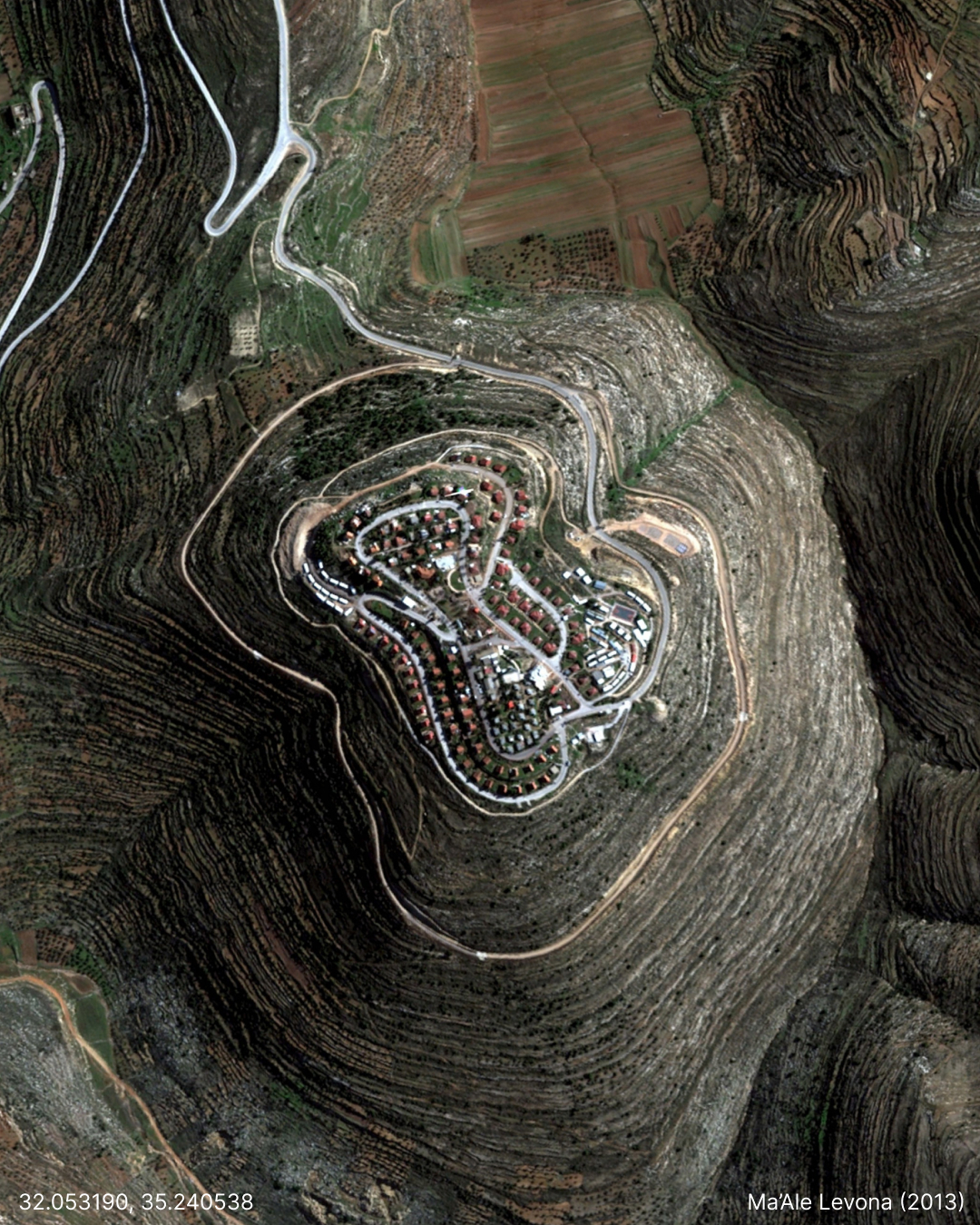
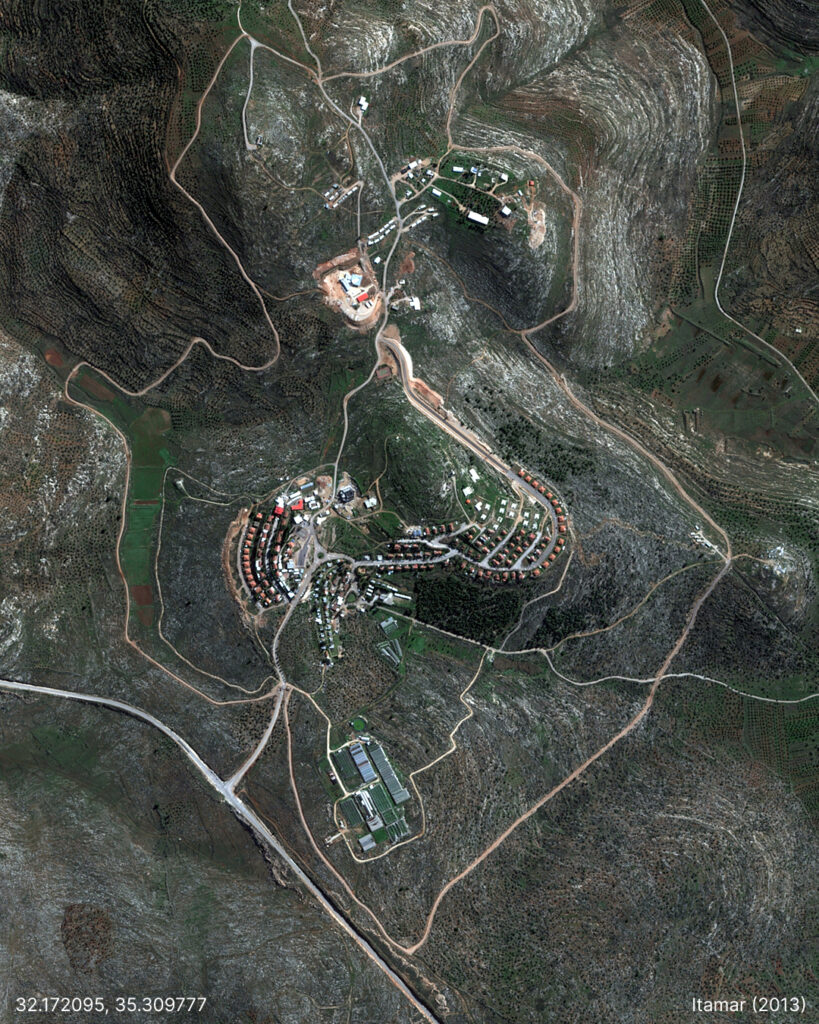
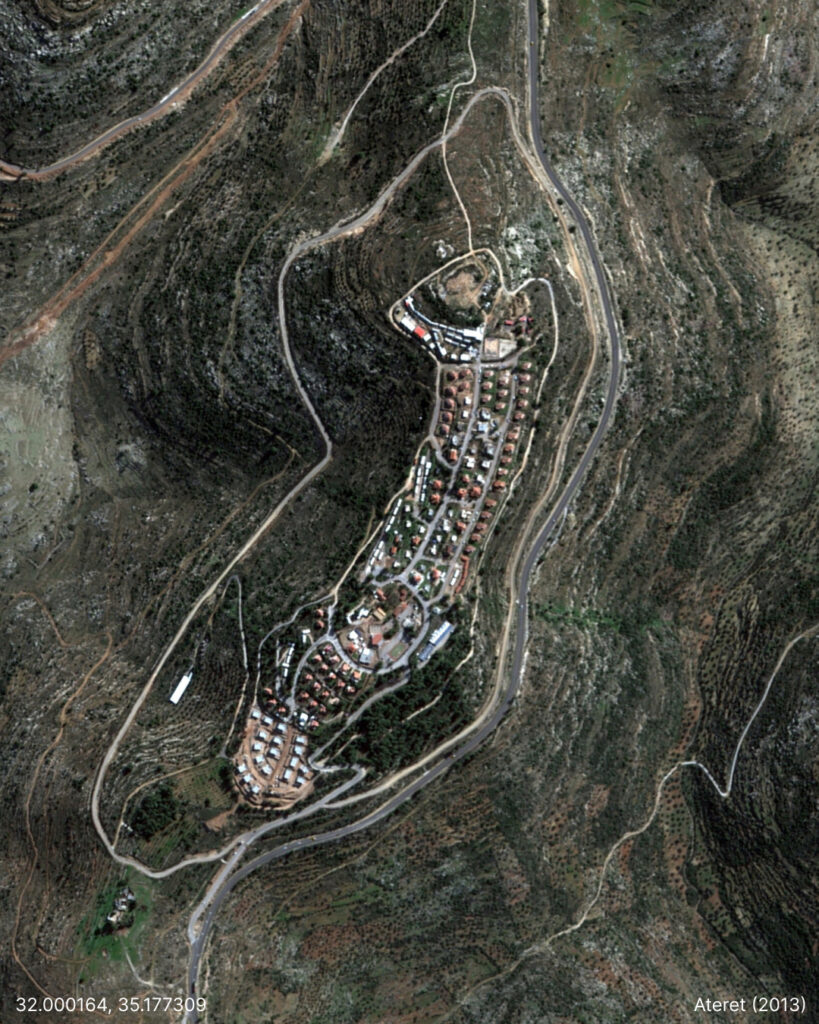
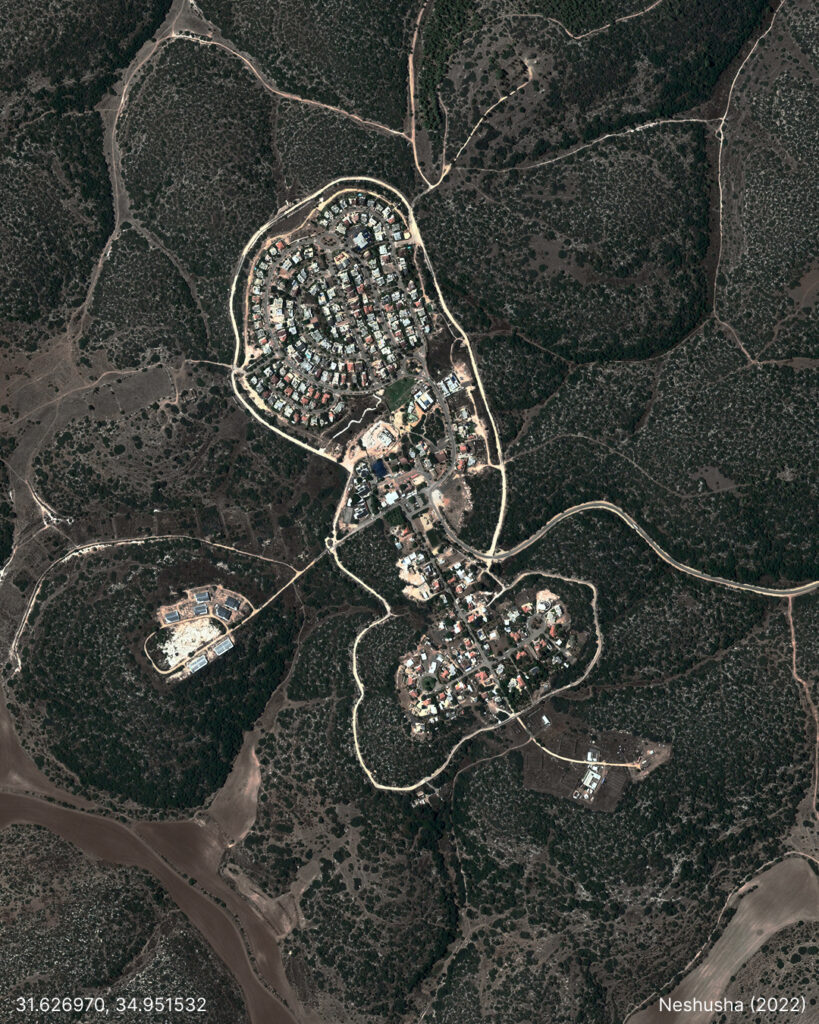
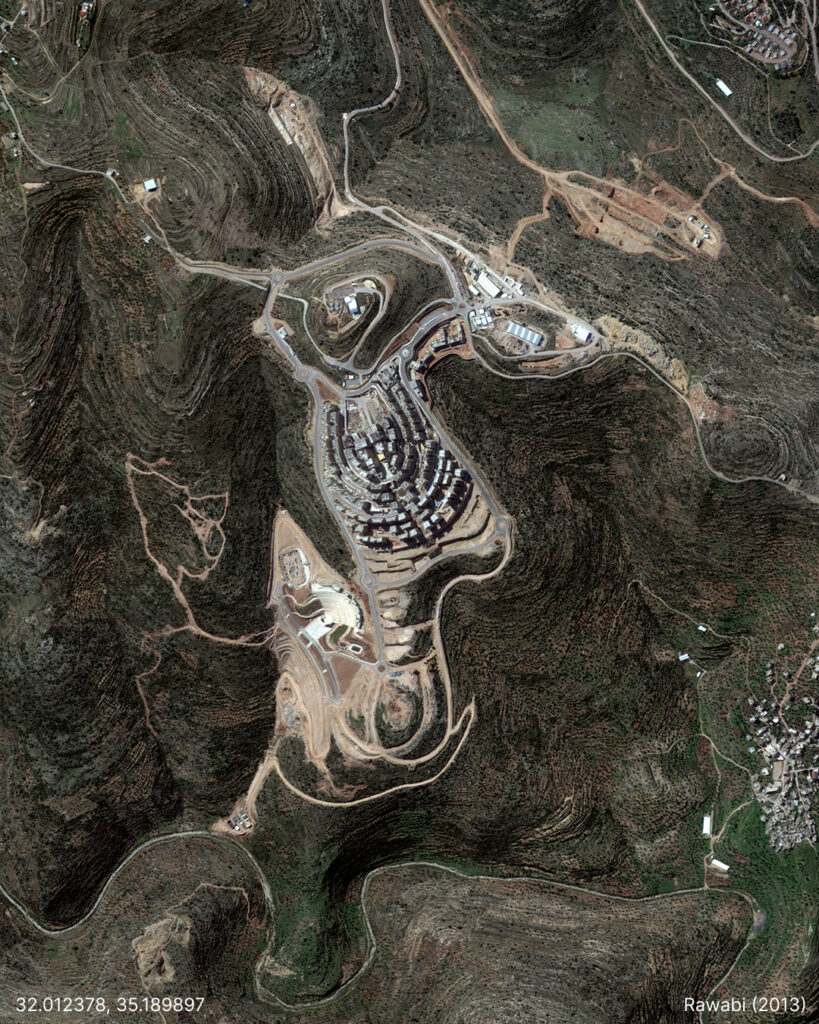
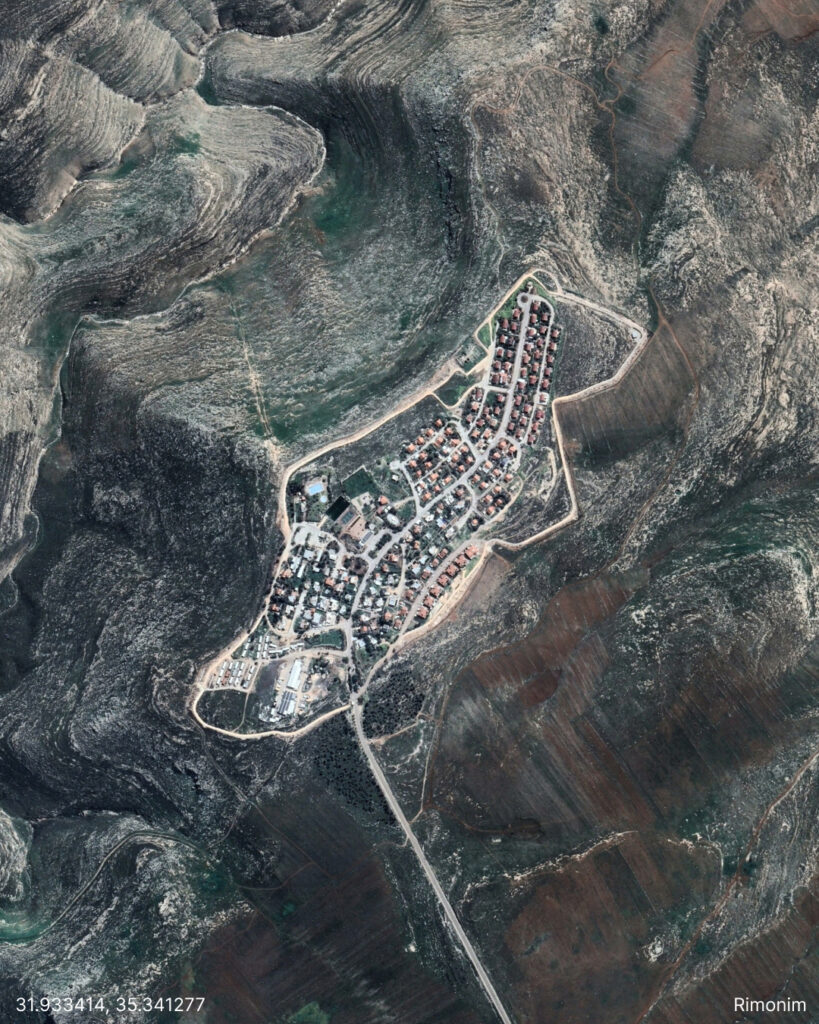
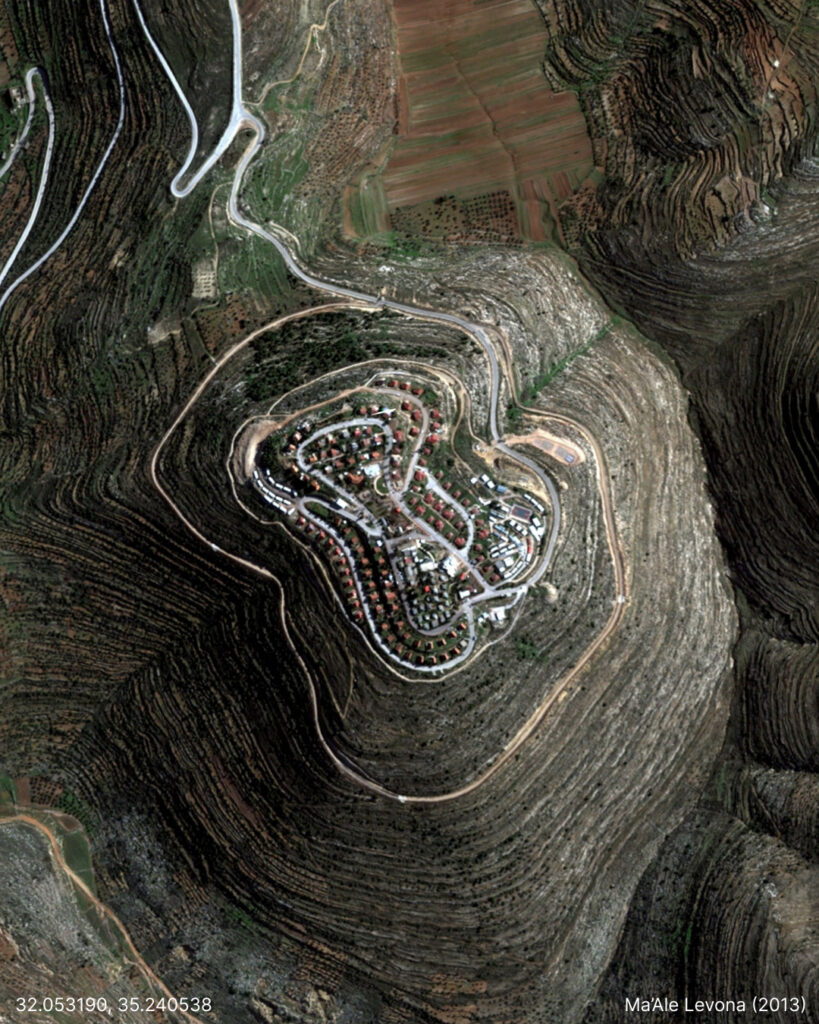
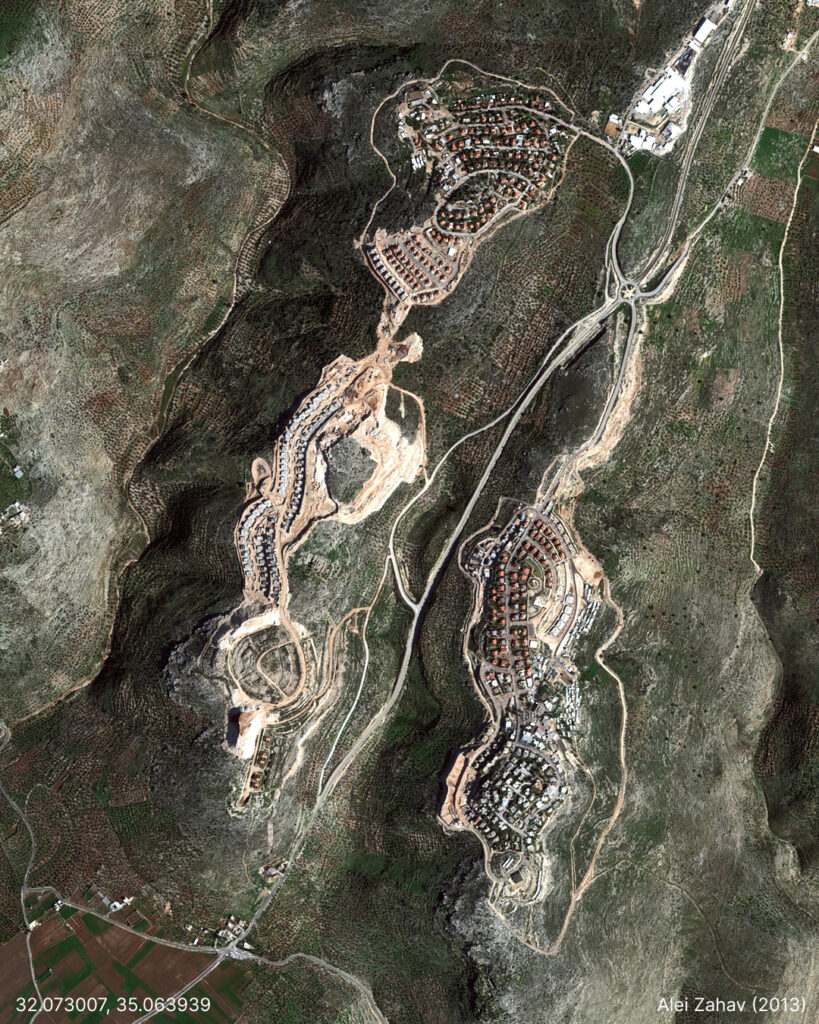
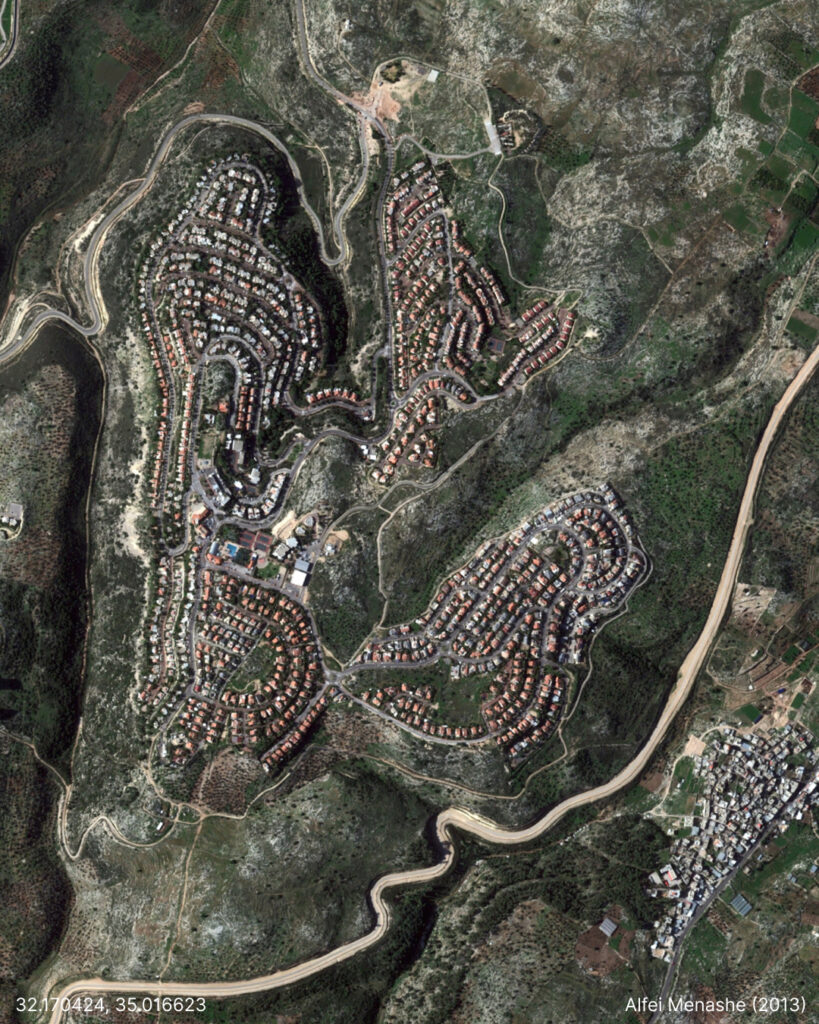
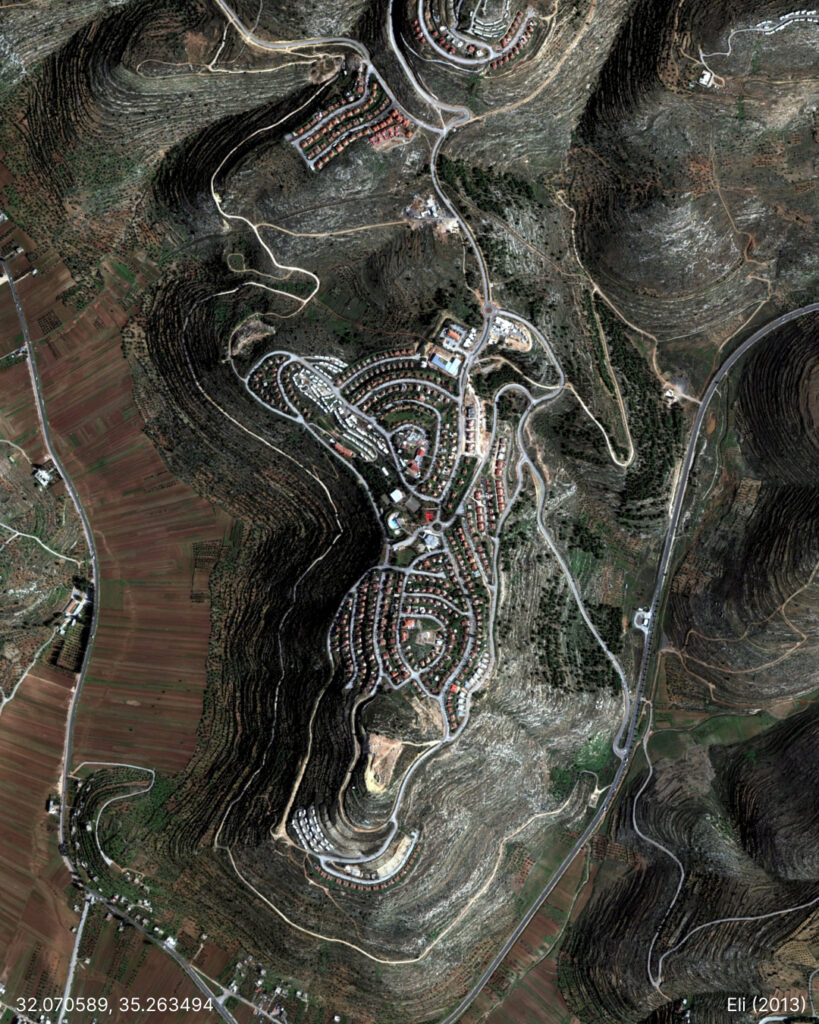
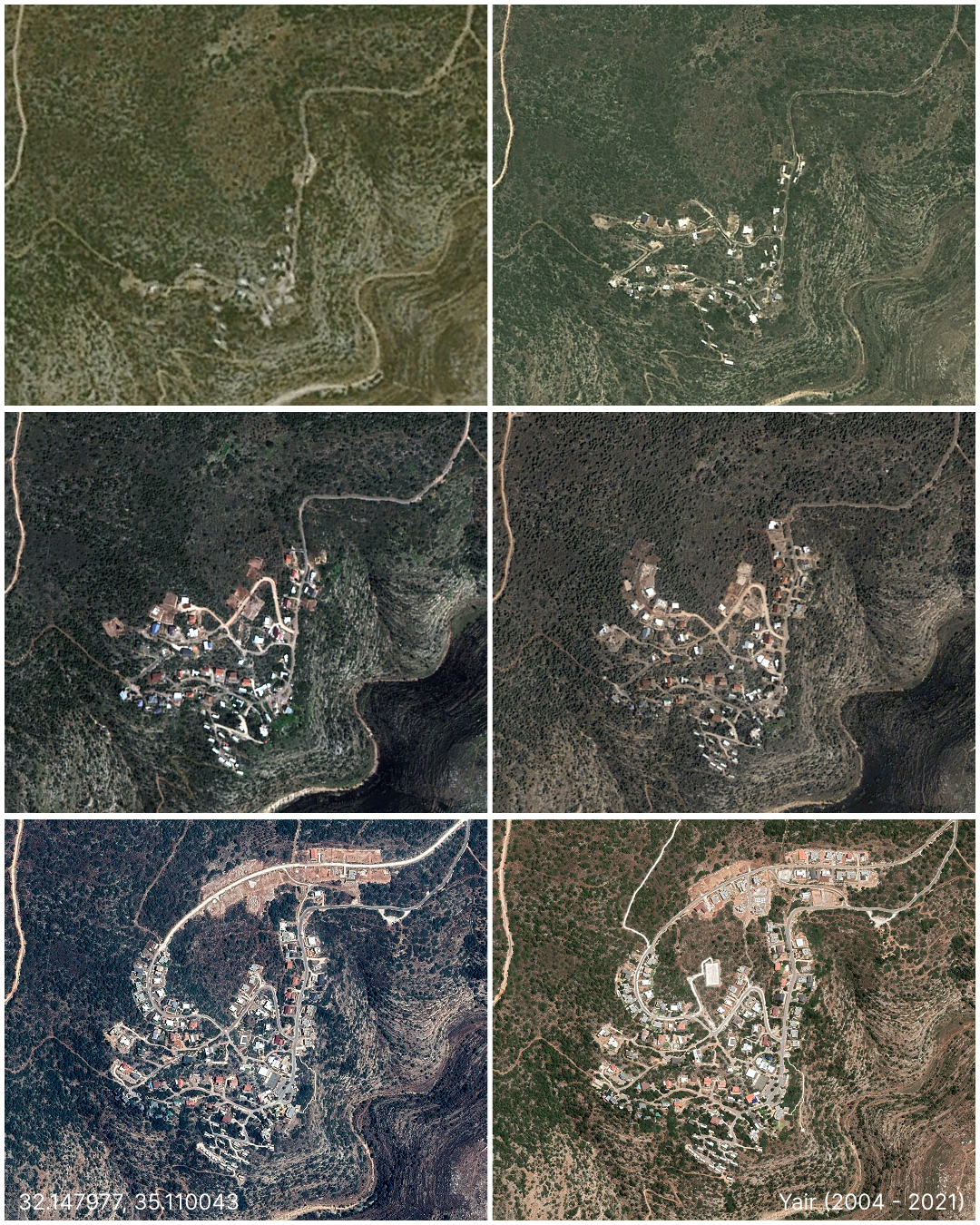
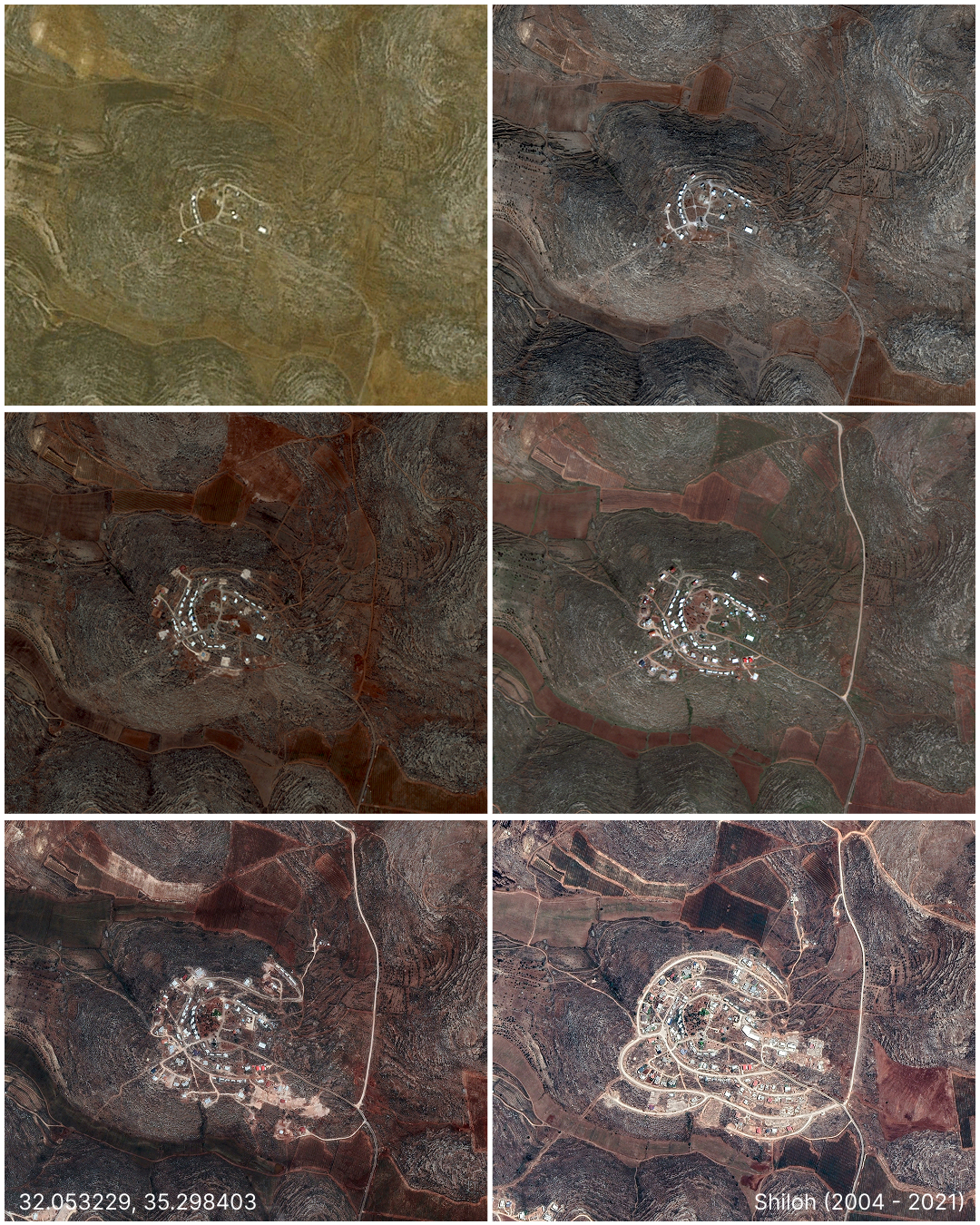
This image displays two settlements: Nofim and Yakir, and one outpost: Yair. Settlements hold an official status as they are recognized by the State of Israel, despite being considered illegal under international law. Outposts, on the other hand, are built without authorization from the Israeli government. They are smaller in size and constructed with lighter materials to facilitate quick installation, aiming to establish a fait accompli and eventually become official settlements (3). Settlements benefit from direct funding to their local administrations, infrastructure investments (such as roads, schools, water, and electricity networks), tax incentives, as well as security guarantees for the settlers (4).